
Batteries for vehicles and energy storage have to be tested throughout their life, from development and production to service. Tests show how much energy a battery holds, how it performs under real operating loads and how long it lasts. Its battery management system (BMS), the electronics that monitor and protect it, has to be tested too. We can supply the test equipment for this or carry out the testing for you. Our cyclers charge and discharge battery modules, packs and complete storage systems under controlled conditions and record voltage, current and temperature throughout. BMS test systems simulate battery signals and faults in the lab, and portable cyclers bring testing and maintenance to service sites.

Battery testing calls for high power, precise control and complete data, at every stage of a battery’s life.
Packs and storage systems run at high voltage and power, yet tests have to follow real load profiles closely. Test equipment must cover the full range without losing accuracy.
Charge and discharge tests draw a lot of electricity. Without energy recovery, the energy released during discharge is turned into heat that then has to be removed.
A pack is only as good as its weakest cell, but pack-level measurements can hide differences between individual cells.
The BMS has to react correctly to faults such as short circuits, but creating those faults on real batteries is dangerous and hard to repeat.
Batteries need diagnosis and maintenance throughout their service life, often at repair sites without full lab equipment.
Our module cyclers cover 10 to 400 V and our pack cyclers 30 to 1,200 V, with custom ranges available. Energy storage test systems reach up to 2,500 V. Precision cycler versions control voltage and current to within ±0.01% of full scale.
Our module and pack cyclers feed the energy released during discharge back for reuse instead of turning it into heat. Maximum recovery efficiency is 93% or higher on module cyclers and 95% or higher on pack cyclers.
Auxiliary data acquisition modules record the voltage and temperature of individual cells alongside the main test, on up to 128 channels, so differences between cells can be found and tracked.
Battery cell simulators reproduce cell voltages and fault conditions such as short circuits, open circuits and reversed polarity, so the BMS can be tested in the lab without real batteries.
Mobile and portable cyclers, balancing tools and leak testers let service teams test, charge, discharge and rebalance batteries on site, with records kept before and after each repair.
Standard and customizable equipment for testing batteries and storage systems, from the lab to the service site.

Charges and discharges battery modules through programmed test sequences to measure capacity and performance. Standard and precision versions, 10 to 400 V.

Charges and discharges battery packs to check capacity and performance, and feeds the energy back for reuse. Up to 1,200 V.
Tests complete storage battery systems, from battery racks to full containers. Up to 2,500 V.

Tests two storage containers against each other to verify capacity, power, efficiency and protection functions. The grid only supplies the losses.

Records the voltage and temperature of individual cells during charge and discharge tests, on up to 128 channels.

Simulates battery cell signals and faults to test how a battery management system (BMS) measures, controls and protects the battery.

A mobile cycler for repair and service sites that tests pack capacity, adjusts state of charge and checks packs before and after repair. 40 to 1,000 V.

A lightweight cycler for testing and maintaining battery modules and rack-mounted batteries on site, with cell voltage and temperature monitoring.
Cell formation testing drew sharp peaks of power and returned large amounts of energy during discharge. Both had to be managed within the plant’s grid capacity and electricity tariffs.
We designed a shared DC bus that links the test equipment with on-site energy storage, then integrated and commissioned the system and tracked its operating data after start-up.
On-site storage absorbed 99.5% of the energy released during formation testing.

Energy storage battery production needs end-of-line, electrical performance and leak tests set up for each product’s voltage and process, with an inspection record kept for every unit shipped.
Projects with these manufacturers cover end-of-line test systems for battery packs, testing on pack production lines and mass-flow leak testers.
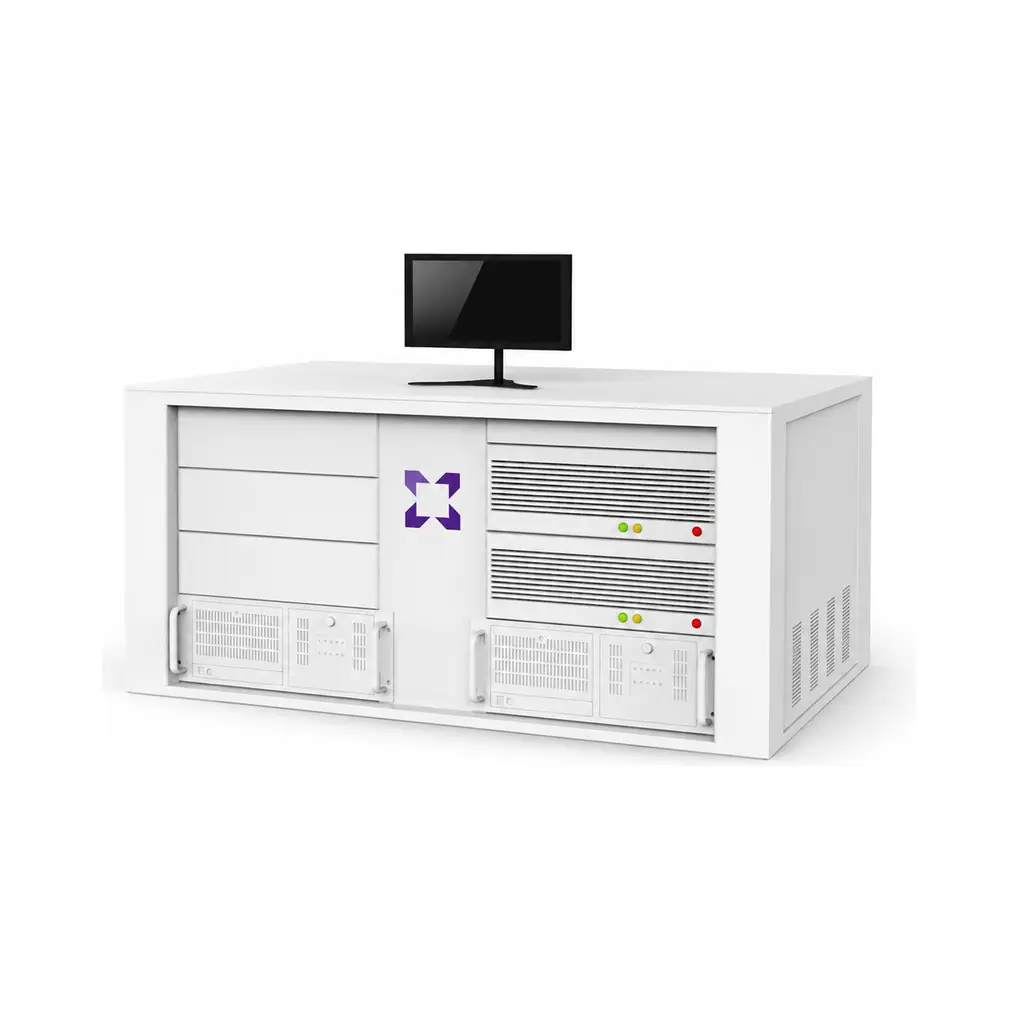
Our engineering team also delivers energy storage projects, from planning and system integration to commissioning and operating support.