On a production line, every battery module, battery pack, component and finished vehicle is checked before it moves on. We can supply the complete testing setup for your line or carry out the testing for you. The setup covers test stations for electrical safety, function, communication and leak tests, the fixtures and automation around them, and the software that runs each test and saves every result. Each setup is configured for your products and line speed, then installed and commissioned on site.
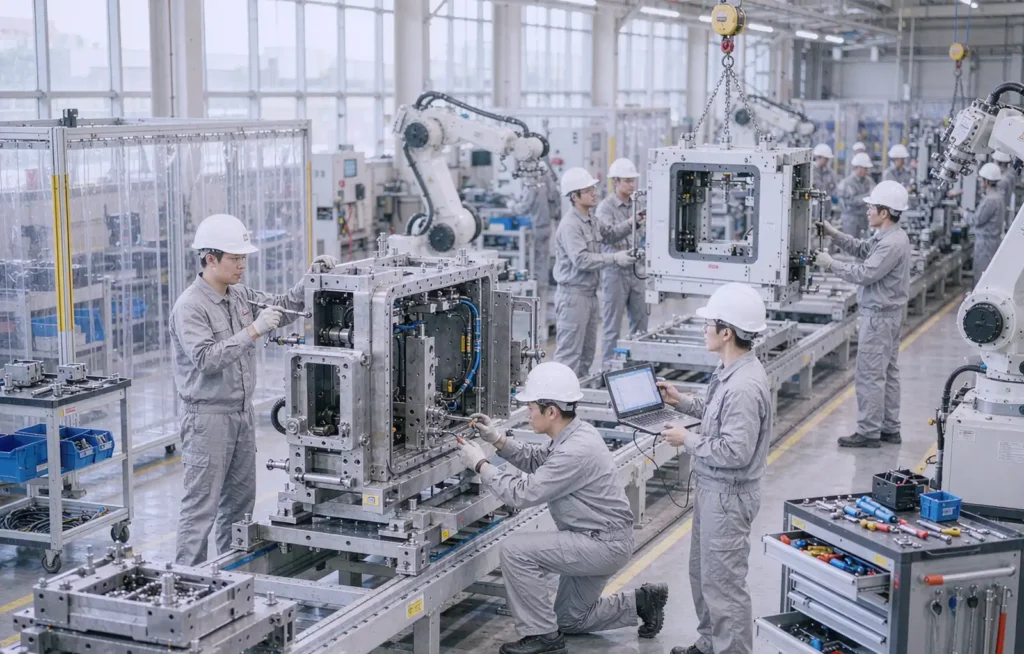
Testing is one of the last steps before a product leaves the line, so it directly affects speed, quality and downtime.
Each extra test adds time at the station. If testing runs over, the whole line has to wait.
When sites use different test setups, results can’t be compared and lessons don’t carry over to a new factory.
Results stay on individual machines or in separate reports, so finding the cause of a fault means searching by hand.
Battery charge and discharge tests run on many stations at once. Without energy recovery, that energy is lost as heat and adds to cooling costs.
Adding a new battery or vehicle model means updating the test stations during a short production stop. If the equipment can’t be expanded, it has to be replaced.
Leak, electrical safety, performance, communication and end-of-line tests are combined into one test section, matched to your process and line speed.
Every site uses the same test items, pass/fail limits and data format, so results can be compared and a new factory can reuse a proven setup.
Each result is linked to its product, batch and station, so any product can be traced back to its test record and faults are easier to find.
Test stations share a DC bus, so energy released by one battery is reused to charge another instead of being lost as heat. At one customer’s battery plants, lines used about 30% less electricity than lines without energy recovery, and on-site storage absorbed 99.5% of the energy released during testing.
Plug-in hardware and no-code test software mean a new model only needs new fixtures and settings, so the switch fits into a planned stop.
How energy recovery works on a battery test line.
Leak, electrical safety, performance, communication and end-of-line tests are combined into one test section, matched to your process and line speed.
Every site uses the same test items, pass/fail limits and data format, so results can be compared and a new factory can reuse a proven setup.
Each result is linked to its product, batch and station, so any product can be traced back to its test record and faults are easier to find.
Test stations share a DC bus, so energy released by one battery is reused to charge another instead of being lost as heat. At one customer’s battery plants, lines used about 30% less electricity than lines without energy recovery, and on-site storage absorbed 99.5% of the energy released during testing.
Plug-in hardware and no-code test software mean a new model only needs new fixtures and settings, so the switch fits into a planned stop.
Standard and customizable equipment for each type of test on the line.

Complete test sections for new production lines, and retrofits for existing ones, configured from ten standard capability modules.

Runs electrical safety, function and communication checks on battery modules and packs in one automated sequence.

Charges and discharges battery packs to check capacity and performance, and feeds the energy back for reuse. Up to 1,200 V.

Tests complete storage battery systems, from battery racks to full containers. Up to 2,500 V.

Runs electrical safety and charging function tests on each finished vehicle at the end of the assembly line.

Calibrates driver assistance sensors, such as radar, cameras and lidar, on vehicles in the assembly plant.

Inspects key EV components such as batteries, motors, chargers, converters and power distribution units before assembly.
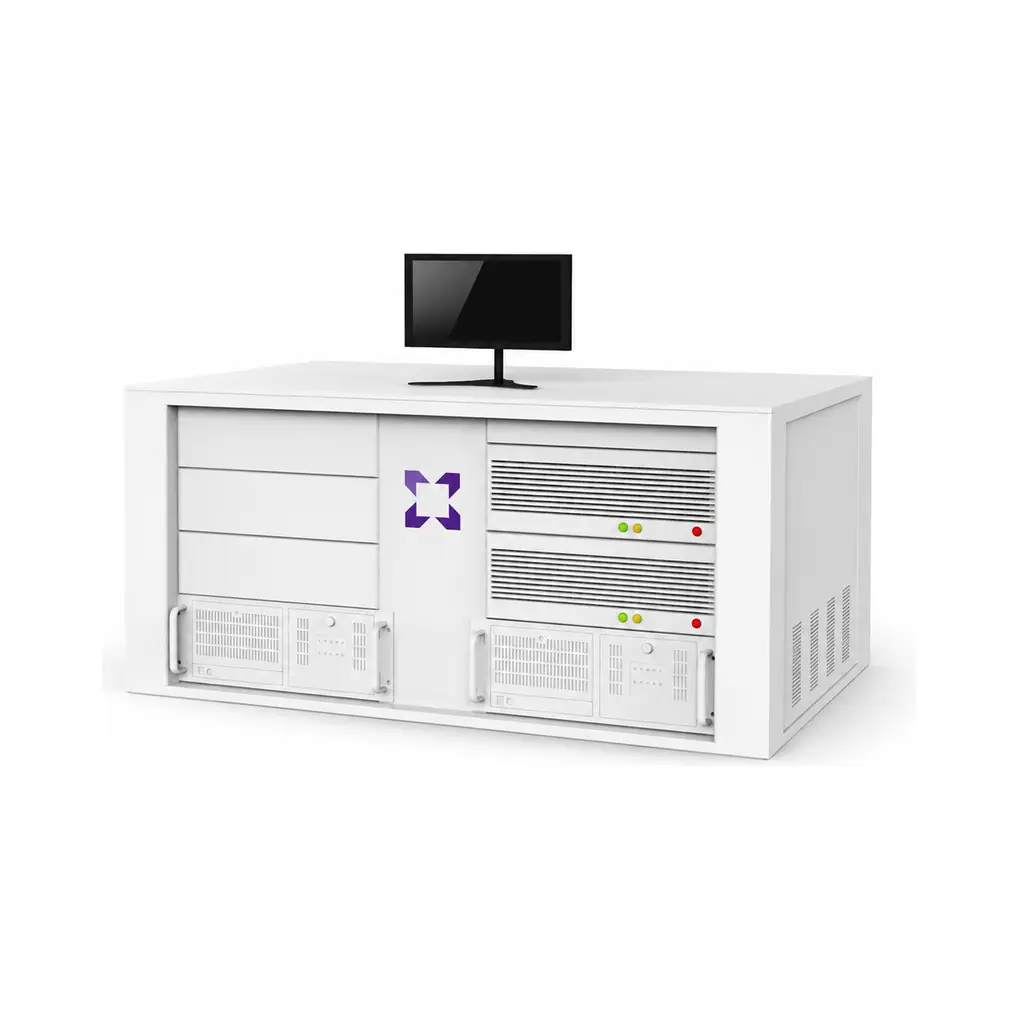
Checks that battery packs, component housings and cooling circuits are properly sealed.
The customer was building battery production lines at several sites in China and abroad. The test stations had to keep up with production, save energy and give the same results at every site.
We supplied the battery test systems and the energy recovery system, and designed and integrated the test section of each line, with a three-year system warranty. New sites reused the same setup.
The lines use about 30% less electricity than lines without energy recovery, and every site shares one test standard and data format, ready to copy to new lines.
Key components had to be tested before going into the vehicle, including electrical, leak and communication tests, without slowing down the line.
We installed one modular test platform and set up the right tests at each station, from signal simulation and leak measurement to internal resistance and communication tests.
All inspections finish within the line’s cycle time, and test data is uploaded in one common format.
We also plan and deliver complete production lines, with the test stations designed in from the start.