
A modern vehicle is run by dozens of control units, small computers that manage the battery, motor, brakes, steering and driver-assistance features. Before a new vehicle or part goes into production, each one has to be tested under a wide range of driving and fault conditions. We can supply the test systems for this or carry out the testing for you. In the lab, our hardware-in-the-loop (HIL) systems simulate the rest of the vehicle so each control unit can be tested on its own. Portable testers let suppliers run the same tests at their own sites, and our end-of-line systems inspect and calibrate each finished vehicle before it leaves the factory. So far, we have helped equip test labs and proving grounds at 38 vehicle and component makers.

Vehicles are developed faster than ever, and more of the testing now falls to suppliers.
A new model can now go from start to launch in as little as 12 to 18 months, instead of three to four years. Test benches are limited and often booked, so there is less time to test everything.
Vehicle makers now expect suppliers to test their parts before delivery, but full test benches are expensive and test engineers are hard to find.
Each supplier uses different equipment and test methods, so the vehicle maker has no common basis for judging results.
Functional safety, cybersecurity, automotive Ethernet and over-the-air update standards all apply to the same control unit, and each revision adds new tests.
Lab equipment from large vendors is expensive, slow to support and hard to adapt to custom test needs.
Portable testers carry the core functions of a full test bench and come preloaded with standard test cases, so engineers can run a complete test sequence with one click, right at their desk.
The vehicle maker keeps one full test bench, and its suppliers use portable testers with the same test library. Tasks are sent over the network and results come back to one central system.
Every supplier tests against the vehicle maker’s own test library, so results from different suppliers can be compared directly.
Our tests follow major automotive standards for networks, diagnostics and driving scenarios, such as AUTOSAR, ISO 14229 and Euro NCAP, and can be adapted to your own internal standards.
We develop our own hardware and software, with open simulation models and programming interfaces, so your team can adjust and extend tests without waiting on a supplier.
Standard and customizable test systems for control units and vehicle networks, from the lab to supplier sites.

Simulates battery cell signals and faults to test how a battery management system (BMS) measures, controls and protects the battery.

Connects the battery, motor and vehicle controllers to a real-time vehicle model, so they can be tested on their own or together.
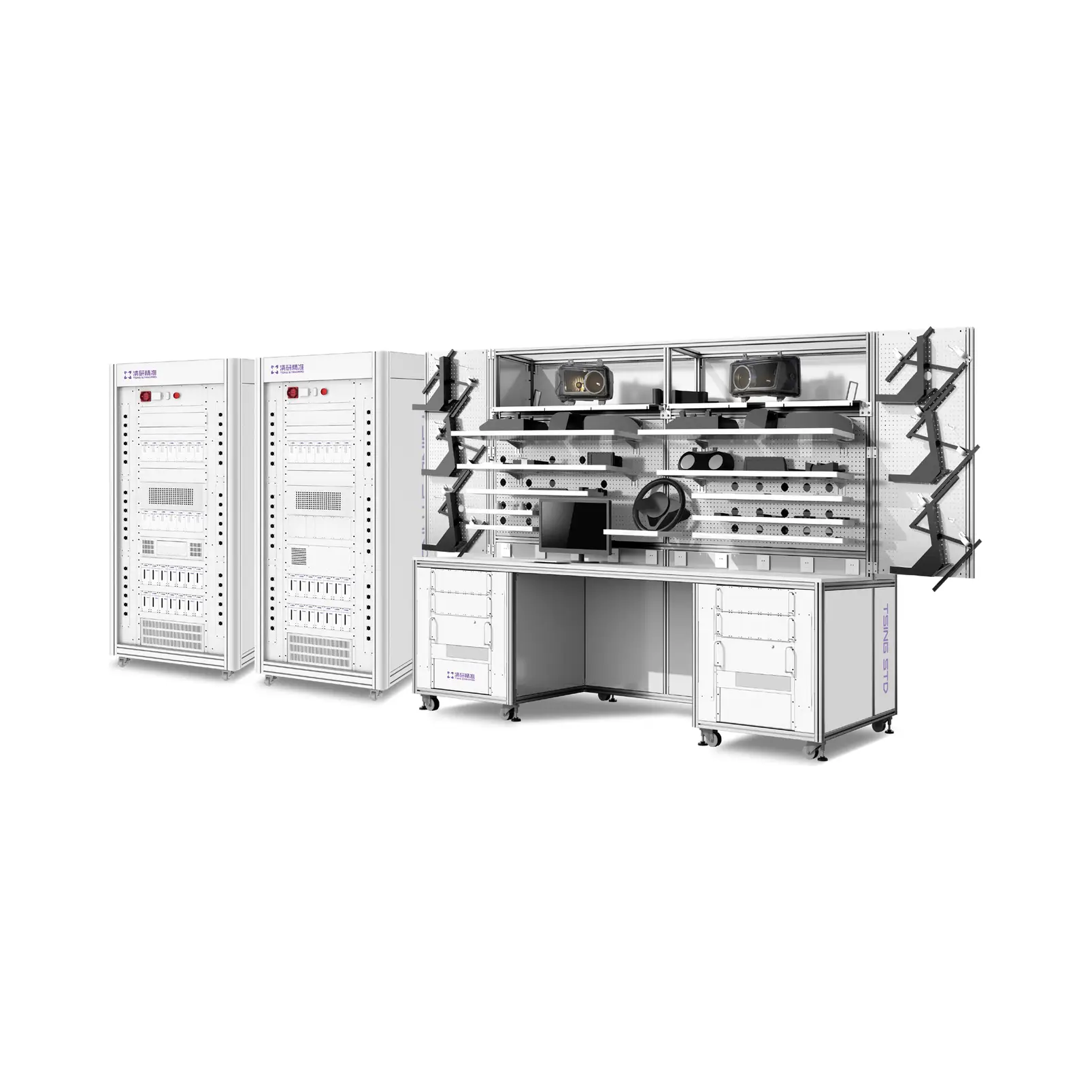
Tests the body control module (BCM) in the lab by simulating its bus signals, hardwire signals and electrical faults, and checks its functions, communication and diagnostics.
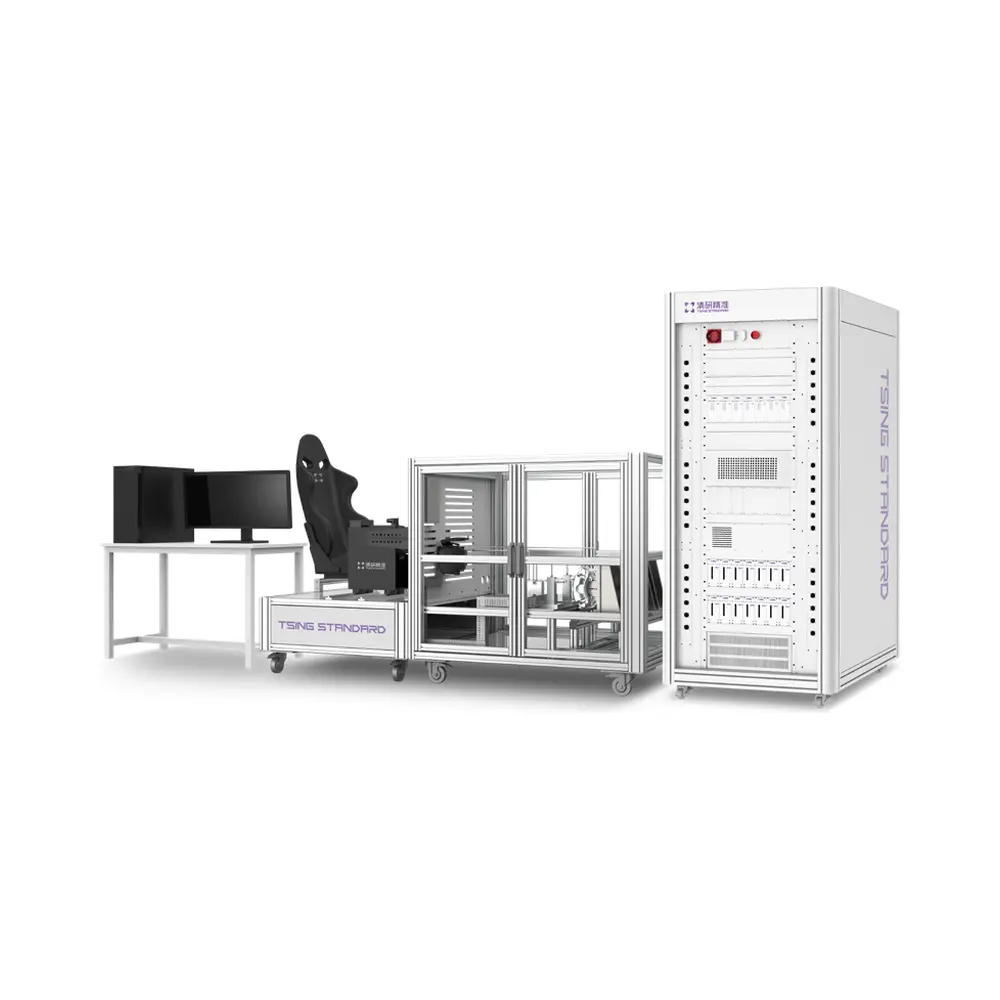
Tests brake controllers, such as ABS and stability control, by combining a brake test rig with a vehicle dynamics model.

Simulates driving scenarios and sensor data so driver-assistance controllers and algorithms can be tested in the lab, including Euro NCAP and ISO test scenarios.

Tests over-the-air (OTA) software updates from the cloud to the vehicle, simulating power, vehicle networks and controllers, with automated test scripts.

A desk-level tester preloaded with OEM test cases. It runs over 95% of CAN and LIN conformance test cases.

A desk-level automotive Ethernet tester preloaded with OEM test cases. It covers TC8 V3.0 protocol and service-layer tests and DoIP.
The customer needed to test how the software controlling its battery, motor and power electronics behaves under typical, extreme and custom conditions. Testing by hand could not cover every combination.
We delivered a test system that simulates the signals from the battery, motor and power electronics, runs tests automatically from scripts, injects faults and generates reports.
Test conditions now run automatically in batches, and reports are generated without manual work.

Over-the-air updates involve the vehicle, the cloud, the mobile network and the app. The customer needed to confirm that updates work across models, software versions and many controllers at once, under different network conditions, while keeping data secure.
We delivered an OTA test system that simulates power, vehicle networks, the cloud and each controller, supporting CAN, LIN, CAN FD and automotive Ethernet.
Every OTA check, from single functions to updates across many controllers, now runs in one automated test process.

Developing battery management software needs data from both production testing and vehicles in service. Testing at one stage alone can’t show how batteries behave over their whole life.
We supplied a BMS HIL platform for developing and validating battery management software, and helped set up a diagnostic system for after-sales service, including remote diagnosis over the air.
Defects per unit in production validation fell by 35%, and battery service life increased by 18 months.
Defects per unit
Battery service life
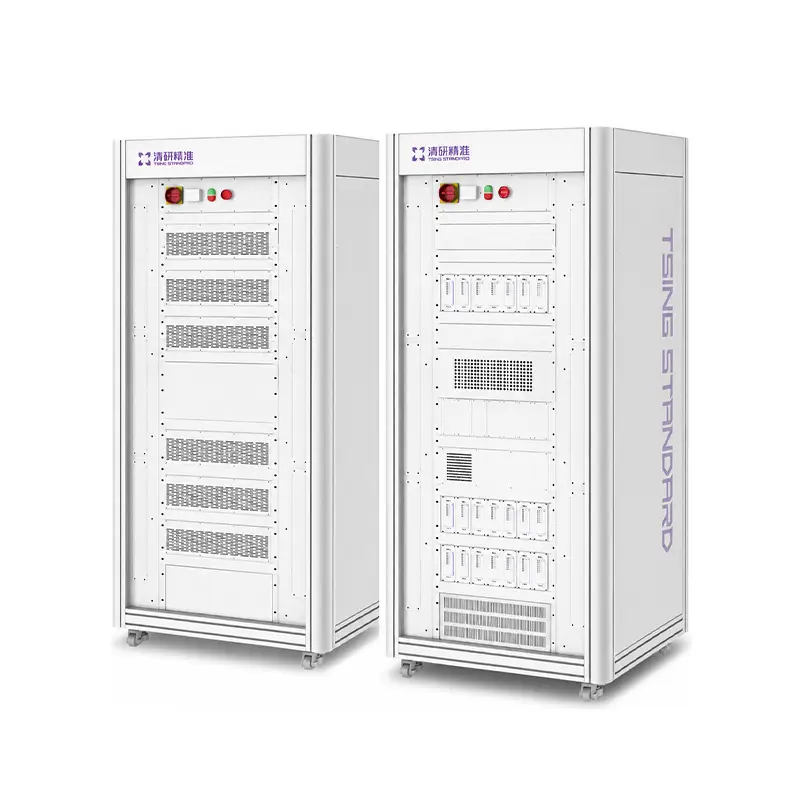
We can equip a complete validation lab for your vehicle or component programs, from HIL systems to test software.